
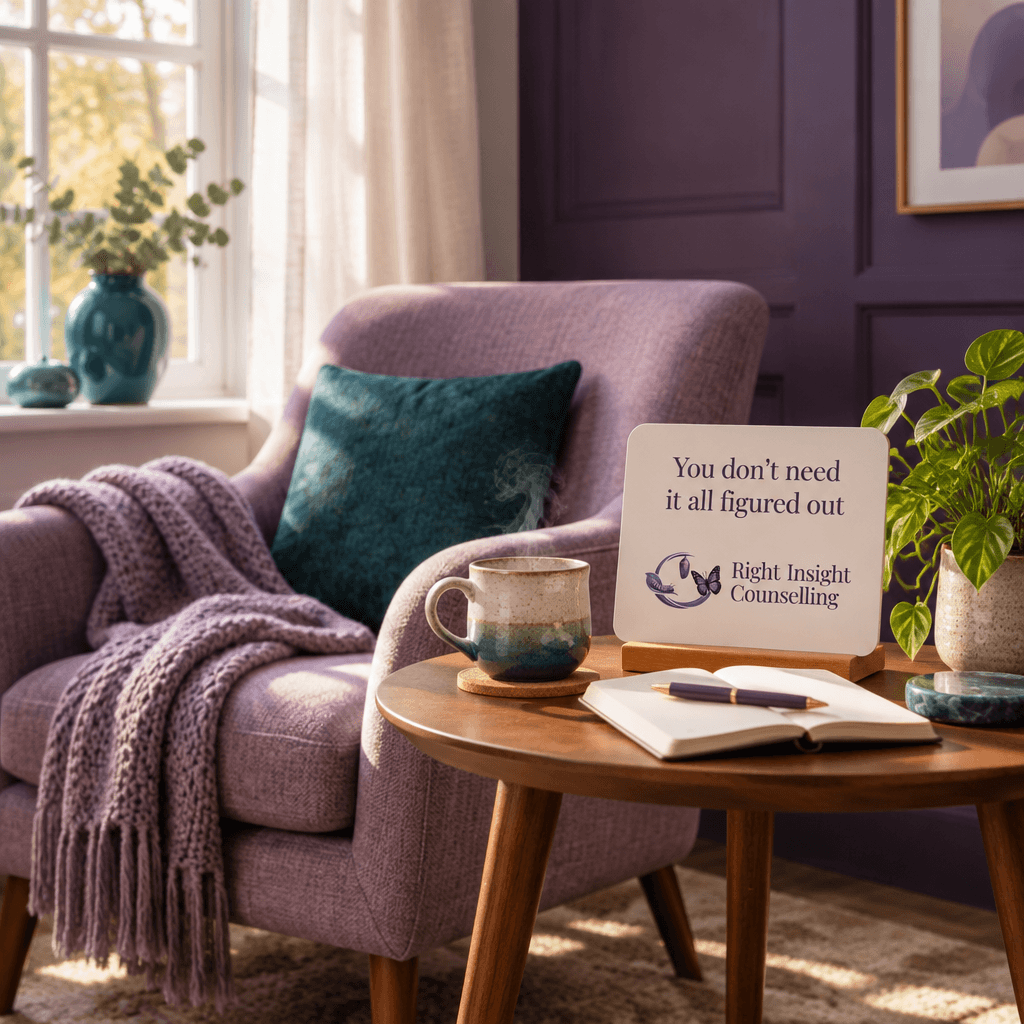
Preparing for your first online counselling session comes down to a number of things, here are three: a private space where you won't be interrupted. A reliable wifi connection, and a teaspoon of courage mixed with an openness to speak about what's going on for you. The counsellor's job is to guide and help you settle in, and together we'l find and clarify your path.
Why are more people choosing online counselling?
Online counselling has become a genuine first option for some clients, rather than a fallback. It is convenient as it removes factors such as travel and parking, some clients prefer this and for them it fits into life, family and work.
However at Right Insight Counselling, we appreciate some clients prefer in person, and we offer this in our Kingston Upon Thames practice. Having both the in person and online practice means we can and do see clients near and far in the UK as well as further afield. Neither option in person or online is a compromise, rather as a client you are choosing what works best for you.
What do I actually need to set up before the session?
A few practical things make a real difference to how the session feels:
- A private room with a door that closes. You want to talk openly and honestly, and that's hard if you're worried about being overheard.
- Earphones if possible, they help with sound quality and add a layer of privacy if anyone else is in the house.
- A reliable connection, tested beforehand if it's your first time using the platform.
- Some tissue, sessions can bring up more than you expect, and it helps having some to hand.
- An open mind, to what may emerge.
- Some time before and after, to notice and be with how you're feeling.
So nothing elaborate, rather what matters is that it's somewhere you can speak privately and openly about what has brought you to counselling.
What should I expect to happen in the first session?
The first session is mostly about your counsellor getting a sense of what's brought you to counselling and what you're hoping to get from it. You might arrive with something specific in mind, anxiety, relationship conflict, grief, stress, or you might simply feel that life has become difficult to manage lately without being able to name exactly why. All are ok as starting points.
There might be some questions: what's going on for you at the moment, a little about your history, what support (if any) you've had before. Some interest in what you're saying to help you with elaborating and thinking more deeply. It's the beginning of understanding what's going on beneath the surface, so that the sessions that follow can actually explore new ways forward rather than being stuck for instance.
You'll also get a feel for how your counsellor works and whether that approach suits you. Choosing the right counsellor is an important part of feeling comfortable enough to talk openly, and that's just as true online as it is in person.
Does online counselling work as well as face to face?
For most people, yes. The key pillars of counselling, being listened with regard, a non judgemental space to think out loud, working with someone trained to notice patterns and reflect them back, doesn't depend on being in the same room. What it depends on is privacy, consistency, and a counsellor who is qualified, experienced, genuinely engaged, all of which is happening whether we meet online or in person.
How do I know if I need counselling, really?
Your initial appointment will help you clarify. There's no threshold you need to cross first. You don't need a diagnosis, a crisis, or a specific label to justify contacting and finding about how we would together. Anxiety, low mood, relationship strain, bereavement, addiction, or simply the sense that things have become harder to manage than they used to be are all reasons people come to counselling. If it's on your mind enough that you're reading about how to prepare for a first session, then maybe it's ok to contact and find out.
What can counselling actually help me with over time?
Beyond the first session, counselling gives you regular time to recognise patterns in how you think, feel, and react, to process feelings you might otherwise push aside, and to develop a clearer sense of what you actually need moving forward. That might mean working through a specific issue like anxiety or grief, or it might mean understanding yourself better and deeper, working out what you want from a relationship, or rebuilding a sense of identity after a difficult period. Sessions are confidential, respectful, and shaped around what matters to you, whether you're meeting weekly for a few months or working together over a longer period.
Common questions about preparing for online counselling
Do I need any special software or equipment?
No. Most online sessions are via zoom, clients have their own recurring link that is sent to you in advance, usually accessible through any browser. A laptop, tablet, or smartphone with a working camera and microphone is enough. Headphones are helpful but not essential.
What if I get emotional during a session and I'm not in a private clinic room?
That's ok and can happen often. Your counsellor will give you the same time and space to sit with those feelings as they would in person.
Can I switch between online and face to face sessions?
Yes. Many clients choose one format to start, and if they are able to, change later depending on accessibility and circumstances. Online or in person, the approach and care stay the same either way.
How soon can I book a first session?
It varies, you are welcome to contact directly to ask about current availability for either formats.
Ready to book your first session?
However you'd rather meet, in our Kingston Upon Thames practice or online from wherever suits you, the aim is the same: dedicated time to be listened to, supported, and understood, with the work shaped around what is bringing you to counselling and your aims. You can find out more about Jessica's background, specialisms, and both session formats at Right Insight Counselling, and get in touch there to arrange your first appointment, whether that's face to face or online.